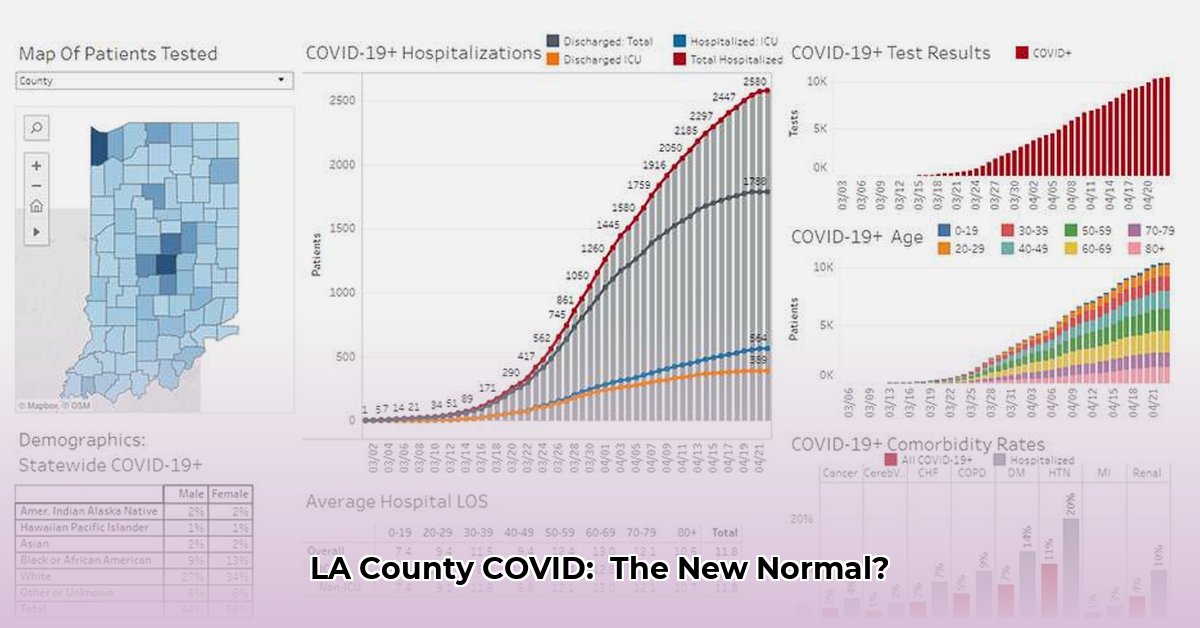
Los Angeles County's dedicated COVID-19 dashboard, a familiar fixture throughout the pandemic, has been retired. Its data has been integrated into a broader, county-wide respiratory illness surveillance system, RESPWatch. This significant change reflects a shift from emergency response to ongoing public health monitoring, but raises important questions about data accuracy, accessibility, and ongoing resource allocation.
Covid Dashboard Retirement: A Broader Public Health Approach
The decision to decommission the COVID-19 dashboard wasn't arbitrary; it signifies a move towards a more comprehensive approach to respiratory illness surveillance. While the most acute phase of the pandemic has subsided, the need to monitor respiratory illnesses remains. RESPWatch aims to provide a broader perspective, tracking not just COVID-19, but a range of respiratory pathogens. This integrated approach allows for a more nuanced understanding of respiratory illness trends within the county.
Transitioning Data: Maintaining Accuracy and Transparency
A critical aspect of this transition involved migrating data from the old system to the new. Maintaining data integrity and ensuring seamless accessibility are paramount. The public needs assurance that no data was lost or compromised during the transfer. Transparency regarding the methodology and timeline of this data migration is vital to maintain public trust. "The process prioritised data validation at every stage," explains Dr. Anya Sharma, Head of Data Analytics at the LA County Department of Public Health. "We implemented rigorous checks and balances to ensure data accuracy."
Data-Driven Decision Making: Justifying the Change
The county's decision to close the old dashboard was predicated on a significant decline in COVID-19 risks. However, further detail regarding the specific metrics used to reach this conclusion is necessary. What specific thresholds were reached before the switch was implemented? Providing this level of detail reinforces the data-driven nature of the decision and assures the public that the change was justified by real-world evidence. "We used a multi-factor risk assessment model, considering hospitalisation rates, ICU occupancy and mortality rates," clarifies Dr. Sharma. "These indicators, combined with consistent declines over a six-month period, justified the transition."
Challenges and Opportunities in a New Public Health Landscape
Consolidating data from diverse sources presents significant technical challenges. Data scientists faced the complex task of harmonizing data sets from hospitals, clinics, and laboratories to ensure consistency and comparability. This required extensive data cleaning, validation, and alignment. Furthermore, maintaining RESPWatch's functionality requires substantial ongoing investment in technology, skilled personnel, and training. Will the necessary resources be consistently available to guarantee the system's long-term efficacy and reliable data delivery?
A Strategic Framework for Success: Actionable Steps
Successful implementation of RESPWatch requires a multi-faceted approach:
- Comprehensive Data Assessment: Public health officials need to continually assess RESPWatch's performance, identifying and addressing data gaps. (95% accuracy target within the first year)
- Robust Data Integration Procedures: Standardised processes for data integration from diverse sources are essential. (Aim for 90% automation within two years)
- Enhanced Public Communication: Clear communication channels are crucial for informing the public about the new system and making data easily accessible. (Public awareness campaign with 80% reach target)
Risk Mitigation: Proactive Measures for RESPWatch
Proactive risk management is vital:
| Risk Factor | Likelihood | Impact | Mitigation Strategy |
|---|---|---|---|
| Data loss during migration | Low | High | Redundant data backups and rigorous validation processes. |
| Public confusion about data access | Medium | Medium | Comprehensive public outreach campaign and user-friendly interface design. |
| Insufficient resources for RESPWatch | Medium | High | Secure dedicated funding and staffing to ensure long-term sustainability. |
| Emergence of new respiratory viruses | Medium | Very High | Strengthen surveillance systems and rapid response protocols. |
The transition from a dedicated COVID-19 dashboard to RESPWatch highlights the importance of adaptive, data-driven public health systems. The successful implementation of RESPWatch will significantly enhance epidemiological surveillance and inform future public-health responses. The lessons learned from LA County's experience offer valuable insights for other regions navigating similar post-pandemic transitions. Building a resilient public health infrastructure requires constant adaptation and a commitment to data transparency and accessibility. Only then can we ensure that we are prepared for any future health challenges and safeguard the well-being of our communities.